







.jpg?cx=0.5&cy=0.5&cw=150&ch=120&blr=False&hash=27326E4FE66B0A2BFABAF4995DA29DC5)








Why Your Makeup Looks Dry, Patchy, or Caked On and What to Use Instead
July 30, 2026

Key Takeaways:
- Flaky or cakey makeup has multiple root causes—not just dryness.
Common culprits include dead skin buildup, dehydration, a disrupted skin barrier, product incompatibility, pilling, and over-application. Diagnosing the underlying issue is the first step toward a smoother, more hydrated makeup finish. - Proper skin prep is crucial for flawless foundation.
It’s not about layering on more products, but about following the right routine: gentle exfoliation, hydrating serums (with humectants like hyaluronic acid or glycerin), barrier-supporting moisturizers, and primers used strategically. - Tailor your product choices and application technique to your skin’s needs.
Match your skincare and foundation formulas for compatibility, apply makeup in thin layers, and use products specifically designed for your skin’s symptoms—whether it’s dryness, dehydration, or separation.
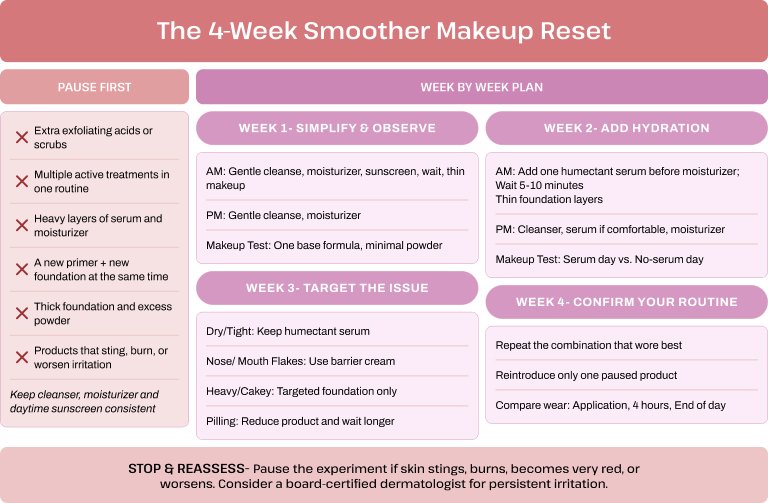
You’ve moisturized, let it sink in, and applied your foundation—only to find that your makeup still looks dry after applying. That dull, patchy, or caked-on finish isn’t just disappointing; it’s also surprisingly common. But the reason your foundation looks flaky or separates often has less to do with how much moisturizer you use and more to do with your overall skin prep for makeup, your product choices, and how you layer them. If a dewy makeup look feels out of reach, remember: the solution is rarely just “add more moisturizer.”
Before you pile on more moisturizer, read ahead to diagnose why your makeup might be turning patchy—and what to do instead.
Why Moisturizer Alone May Not Smooth Your Makeup Base
Moisturizer hydrates and softens the skin’s surface, but if dead skin cells are piling up, that cushion won’t be enough to guarantee a smooth foundation finish. When foundation sits atop uneven skin, it tends to “catch” or highlight dry patches. That’s why your makeup can look dry or flaky even when your skin feels moisturized underneath: moisturizer may soften the skin, but it hasn’t fixed the underlying rough texture that your makeup is likely clinging to.
It also helps to know if your skin is dry (lacking oil), dehydrated (lacking water), or both:
- Dry skin: Appears flaky, rough, and more textured. It benefits from emollients and richer creams, which help seal in moisture.
- Dehydrated skin: Feels tight, looks dull, gets dry or cracked after a few hours of wear. It benefits from humectants like glycerin or hyaluronic acid, which attract water to the skin.
A disrupted skin barrier ramps up issues, increasing what is known as transepidermal water loss (TEWL) and making skin feel even drier or look flakier under makeup. Sometimes, flaky or patchy makeup is simply due to product incompatibility: formulas that don’t mix well can pill, separate, or exaggerate dry spots.
How to Prep Skin for a Smoother Foundation Finish
Skin prep is more important than buying the perfect foundation. The goal is not to layer as many products as possible. It’s about creating an even, hydrated canvas without overloading your skin. Here’s a reliable step-by-step method:
1. Gently Exfoliate (1-3x Per Week)
- Exfoliating sloughs away dead skin cells that contribute to texture and flaking. Use a mild AHA (like glycolic or lactic acid) for effective but gentle resurfacing. If you prefer an even gentler approach, try an enzyme exfoliant or a soft washcloth. Avoid harsh scrubs and over-exfoliating, as these can disrupt the barrier and make flaking worse.
- Try: Kiehl’s Pineapple Papaya Facial Scrub, SkinCeuticals Glycolic 10 Renew Overnight
2. Hydrate
- Right after exfoliating, apply a serum with humectants (hyaluronic acid, glycerin). These ingredients draw water in, helping skin look plumper and less tight.
- Try: Vichy Mineral 89 Hydrating & Plumping Daily Booster, La Roche-Posay Hyalu B5 Suractivated Serum
3. Seal with Moisturizer
- Lock in hydration with a cream that suits your skin needs. Richer, ceramide-packed creams are recommended for drier or more compromised skin.
- Try: CeraVe Skin Moisturizing Cream, Lancôme Absolue Longevity The Soft Cream.
4. Wait Before Applying Makeup
- Let skincare absorb for 5-10 minutes to prevent pilling.
5. Prime Where Needed
- Use a hydrating primer only on areas that need extra grip or smoothness, not necessarily all over. Learn more about choosing a makeup primer.
- Try: Armani Beauty Luminous Silk Hydrating Glow Extending Primer
Diagnostic Table: What to Use Based on Your Visible Makeup Symptoms
Once you understand what’s happening on your skin, matching your makeup concern to its underlying cause becomes much easier. Use the table below to help diagnose your main concern and discover suitable products and techniques for a smoother, more flawless base.
| If Your Makeup Does This | Potential Cause | What You Can Do | Suitable Products |
| Clings to dry patches | Dead skin buildup | Use gentle exfoliation and follow with moisturizer. | Kiehl’s Pineapple Papaya Facial Scrub, SkinCeuticals Glycolic 10 Renew Overnight |
| Separates after application | Formula incompatibility | Match water-based products with water-based products or silicone-based products with silicone-based products. | Use all water-based or all silicone-based products |
| Looks dry after a few hours | Dehydrated skin | Add humectants like glycerin or hyaluronic acid before moisturizer. | Vichy Mineral 89 Hydrating & Plumping Daily Booster, La Roche-Posay Hyalu B5 Suractivated Serum |
| Feels heavy and cakey | Too much product | Apply thinner layers and build coverage only where needed. | Lancôme Teint Idôle Ultra Wear Foundation Stick |
| Flakes around the nose or mouth | Barrier disruption | Use ceramide-rich skincare and reduce irritating exfoliants. | Lancôme Absolue Longevity The Soft Cream. |
| Balls up while blending | Makeup pilling | Use less skincare, wait between layers, and check primer compatibility. | Armani Beauty Luminous Silk Hydrating Glow Extending Primer |
Product Types to Help with Dry, Patchy, or Cakey-Looking Makeup
Each step of your routine, from serum to setting spray, can make a difference in how your makeup looks and lasts—especially if you’re struggling with dryness, patchiness, or caking. Here are the key product types to incorporate for a smoother, healthier-looking finish, along with recommendations to address specific concerns.
1. Hydrating Serum:
Useful when foundation looks dry, tight, dull, or cracked after a few hours of wear. Look for humectants like hyaluronic acid or glycerin, which help attract water to the skin. Use a serum like Vichy Mineral 89 Hydrating & Plumping Daily Booster or La Roche-Posay Hyalu B5 Suractivated Serum before your moisturizer to help keep your base supple and comfortable.
2. Barrier-Supporting Moisturizer:
Useful when foundation catches around the nose, mouth, or cheeks, especially if skin feels sensitive, tight, or over-exfoliated. Ingredients like ceramides, emollients, and squalane can support a softer, more comfortable-looking base. Try CeraVe Skin Moisturizing Cream, which is formulated to support the skin’s barrier and help retain moisture.
3. Richer Cream:
Useful if foundation clings to rough areas or looks flat and dry shortly after application. For extra cushion before your makeup base, look for a moisturizing, cushiony formula like Lancôme Absolue Longevity The Soft Cream.
4. Targeted-Coverage Foundation:
If makeup looks heavy or cakey, the fix is often less, not more. Use foundation sparingly, layering only where necessary. Stick foundations like Lancôme Teint Idôle Ultra Wear Foundation Stick let you pinpoint coverage for a more skin-like effect.
5. Setting Spray or Mist:
A setting spray or mist can help makeup layers look less powdery and more blended together, but it should not replace good skin prep. Use a finishing spray like L’Oreal Infallible 3-Second Setting Mist, after foundation and powder, especially if your base looks too matte or textured.
Your FAQs—Answered
Q: Why does my foundation look patchy after a few hours?
A: Patchiness often results from dehydration, over-powdering, or too-matte foundation. To help prevent patchiness, prep with hydrating serums, apply foundation in thin layers, and use foundation and powder only where needed.
Q: Should you put moisturizer on before foundation?
A: Yes! Moisturizer hydrates and preps skin for smoother makeup. Give it 5-10 minutes to absorb, then move on to primer and foundation.
Q: Why does makeup pill after moisturizer?
A: Pilling usually means too much skincare is sitting on the skin, or the formulas aren’t compatible (think water-based with silicone-based). Use thinner layers, wait between steps, and check your products’ ingredient bases for compatibility.
Q: How do I stop foundation from separating on my nose?
A: This can happen because of buildup or formula incompatibility. Try the following: use less skincare on your nose, apply a targeted primer only where makeup separates, press foundation on in thin layers, and set lightly with powder only if the area gets shiny.
Q: Will exfoliating help if foundation clings to dry patches?
A: Yes, but don’t overdo it. Gentle exfoliation removes dead skin, making foundation glide on more smoothly. Cut back if your skin feels sore or looks more flaky.
The Bottom Line on Avoiding Flaky, Cakey-Looking Makeup
Fixing makeup that looks flaky, patchy, or caked-on isn’t just about using more moisturizer. Instead, diagnose whether you’re dealing with dead skin, dehydration, barrier disruption, incompatible products, or heavy-handed application. A routine that gently exfoliates, hydrates, moisturizes, allows absorption time, and matches compatible makeup layers will set you up for a smoother, dewier, more comfortable look—no complicated hacks or guesswork required.
Product selections are made using editorial research and brand knowledge; personal use or testimonials are noted where applicable.


Read more