












Why Blush Looks Too Bright, Orange, or Ashy, and What Fixes It
November 06, 2026

Key Takeaways:
- Blush that reads too bright, orange, ashy, or invisible usually points to a mismatch in saturation, undertone, or depth rather than a problem with the formula itself.
- Apply powder blush with a fluffy brush in thin layers, blending the edges before deciding whether to add more color.
- NYX Professional Makeup Buttermelt Blush offers buildable color for gradually adjusting intensity, while Maybelline Grippy Serum Primer can help blush apply more evenly over a base that slips or catches.
- Once the shade looks balanced, tap NYX Professional Makeup Buttermelt Highlighter onto the high points of the cheekbones for dimension rather than mixing it into the blush.
Blush can go wrong in more ways than one. A color that looks beautiful in the pan can turn too vivid, too warm, too pale, or oddly flat once it meets your base makeup and natural skin tone.
Start with the visible problem. Once you know whether the issue is shade temperature, depth, texture, or application, the fix becomes much more specific—and much less frustrating.
Why Does Blush Look Too Bright, Orange, Ashy, or Invisible?
Too-bright blush often has more to do with saturation or placement than the product itself. A dense brush, a heavy first layer, or a highly pigmented formula can create color that overwhelms the rest of the complexion.
Orange, ashy, or disappearing blush is usually a shade-match clue. A warm color can pull orange against a cooler undertone; a pale or muted shade can look chalky or vanish when it does not have enough depth to show up naturally.
Which Product Step Fits Your Blush Problem?
Correct the shade and application first. Then use primer to support even wear and highlighter to add dimension once the blush itself is doing the right job.
| What you notice | Routine adjustment | Product to try |
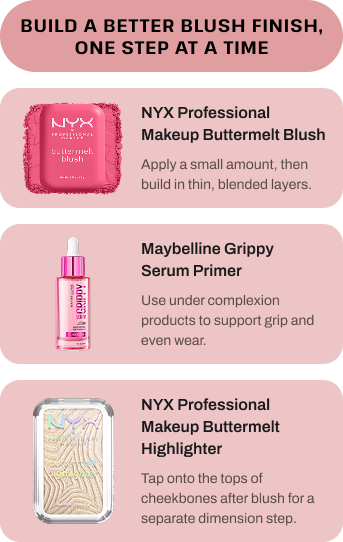
| Too-bright powder color | Apply a small amount, then build in thin, blended layers. | NYX Professional Makeup Buttermelt Blush |
| Blush slips or applies unevenly | Use under complexion products to support grip and even wear. | Maybelline Grippy Serum Primer |
| Correctly matched blush looks flat | Tap onto the tops of cheekbones after blush for a separate dimension step. | NYX Professional Makeup Buttermelt Highlighter |
How Do You Choose Products for a More Natural Blush Finish?
A well-finished cheek look has distinct layers. Blush supplies color; primer supports how makeup grips; highlighter adds light on top. Separating those jobs helps you correct the actual issue instead of covering it up.
NYX Professional Makeup Buttermelt Blush is a buildable powder option when you want to control intensity in thin layers. Start with less product than you think you need and assess before adding more.
Maybelline Grippy Serum Primer fits the routine when your shade is right but blush skips, fades, or clings unevenly over the base.
NYX Professional Makeup Buttermelt Highlighter is for dimension after blush is already matched and blended. Tap it above the cheek color rather than mixing it through the blush itself.
How Do You Apply Blush So It Looks More Natural?
- Choose the shade family first: cooler or berry-leaning colors for a cooler result, warmer peach or coral tones for a warmer result, and depth that can hold its own against your complexion.
- For powder blush, use a fluffy brush, pick up a small amount, and tap off excess before touching the cheeks.
- Place color where you want the lift, then blend the edges before the first layer fully settles.
- Assess in natural light before building. It is easier to add one sheer layer than to blend back a dense deposit of pigment.
- Add highlighter only after blush reads balanced; it should catch the high points, not erase the cheek color underneath.
How Do You Troubleshoot Blush Without Starting Over?
If color is too bright, diffuse the edges with a clean brush or a small amount of your base product before adding anything else. If it pulls orange or ashy every time, change the shade family rather than the amount.
If blush looks patchy, make sure your base is set to the right point for your formula. Powder can catch on a still-tacky base, while cream and liquid formulas often blend best before powder products go on top.
Your Blush-Matching Questions, Answered
Why does blush look orange on me?
The color may be too warm for the result you want, or it may be interacting with your undertone and base makeup. Try a cooler or more neutral shade family.
Why does blush look ashy?
A shade can look ashy when it is too pale, too muted, or does not carry enough pigment depth against your complexion. Look for more depth or a more saturated finish.
Is cream or powder blush easier to control?
Powder is often easier to layer gradually, while cream can look especially skin-like when blended in thin layers. The best choice is the formula you can work with confidently.
Should highlighter go over blush?
Yes. Apply it on the high points of the cheekbones after blush is blended, keeping the two effects distinct.
A natural blush result starts before the brush hits your cheeks. Match the shade to your undertone and depth, use a light hand, and let your supporting products do only the jobs they are meant to do.
Editorial Disclosure: This article reflects editorial research and brand formulation data. Product recommendations are based on ingredient analysis and brand claims.


Read more